Car Detailing Tips 02
Keeping your car looking its best doesn’t always require a full detail. Regular washing, removing contaminants early and using the right products…
Read Article

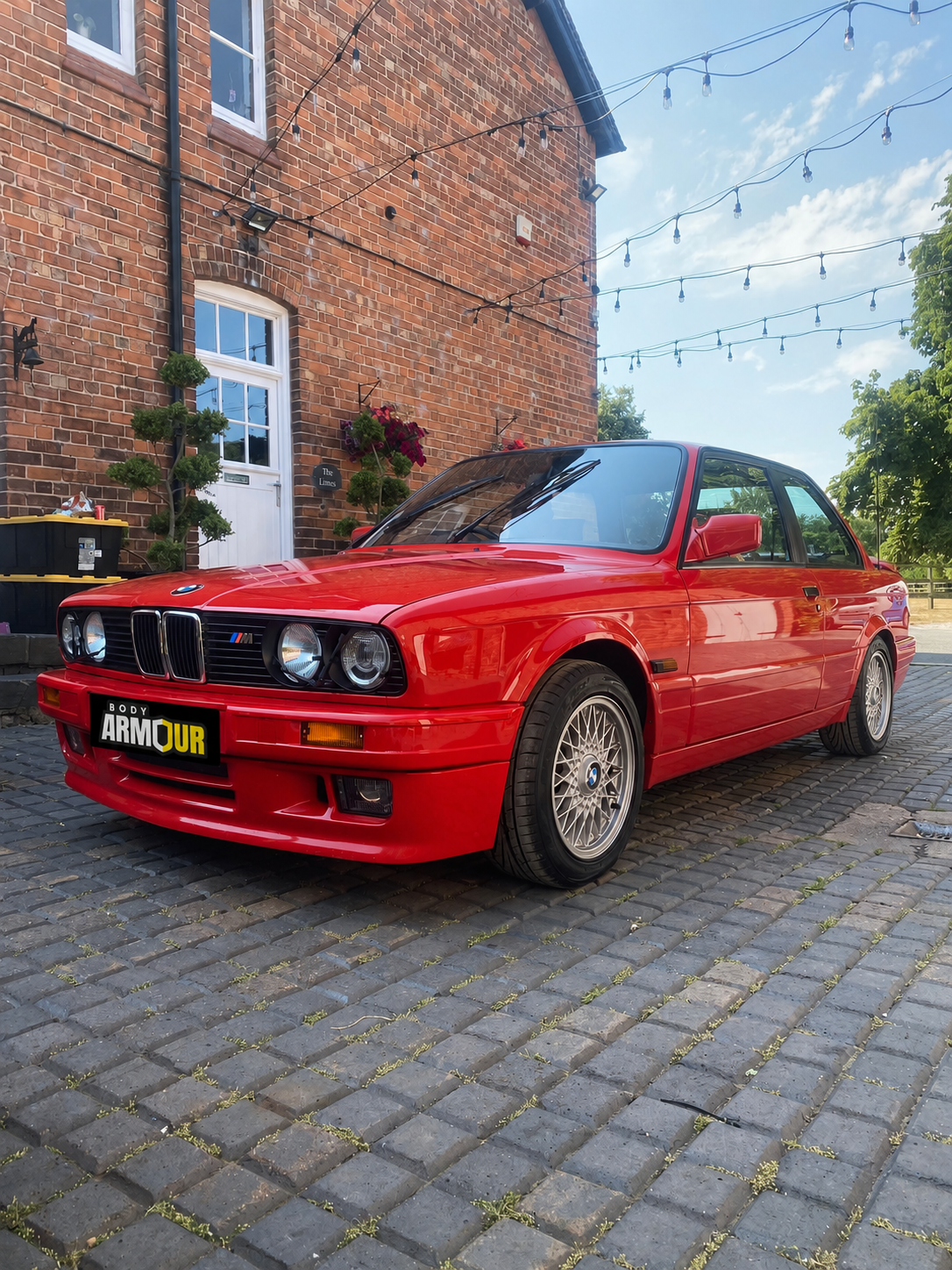
Short answer: Body Armour Ceramic lasts up to three years. Body Armour Graphene lasts up to five. Both are long-term protection rather than permanent protection, and how you wash the car afterwards affects real-world life more than almost anything else.
It’s the first thing people ask, and fair enough. It’s also the question the industry answers worst, because "up to ten years" gets thrown around far more freely than it should. If you want the wider comparison against cheaper options, we’ve covered ceramic coating vs wax vs sealant separately.
Up to three years.
Our ceramic coating creates a hydrophobic barrier that bonds to properly prepared paint. It repels water, dirt and environmental contamination, adds noticeable gloss and depth, and handles UV exposure on a car that lives outside through a British year.
The benefit you’ll feel day to day is the maintenance. Road grime stops clinging as stubbornly, water beads and rolls off instead of sitting there, and the car takes far less effort to keep looking right. Three years of that adds up.
Up to five years.
Body Armour Graphene is our premium option, and the spec backs it up: 10H hardness, chemical resistance from pH 2 to 13, a 120° water contact angle, roughly two microns thick, stable from minus 40°C to 250°C.
It’s also more versatile. Graphene goes onto paintwork, wraps, wheels, lights, plastic trim and carbon fibre, so you’re protecting more of the car than paint alone.
The gap is two years and a step up in specification, but the question isn’t really which lasts longest. It’s how long you’re keeping the car. Handing it back in three years? Ceramic covers the whole time you’ll own it. Keeping it? Graphene means one application instead of two, and the second would have needed the preparation work all over again. We’ve gone into that decision in our guide to whether ceramic coating is worth it on a new car.
Both products have a defined maximum durability. Whether you get near it depends on four things.
This is what separates a coating that lasts from one that fails early, and it’s the stage most often cut short. A coating bonds to the surface it’s applied to. If road tar, bonded contamination or polishing oil is sitting in between, it bonds to that instead and takes it along when it goes. A coating is also optically clear, so any swirl marks underneath are locked in for its whole life. That’s why machine polishing forms part of the process wherever the paint needs it.
Our graphene process runs through pH-neutral snow foam, a pressure rinse, wheels and arches cleaned separately, liquid decontamination, a two-bucket contact wash with a grit guard, a clay stage to lift bonded tar, drying with plush microfibre, machine polishing, then a panel wipe to strip every trace of oil before the coating touches the paint. That preparation is most of the appointment, and most of the reason the coating still performs in year four.
Durability varies enormously between products. A spray sealant might last a few months. Body Armour Ceramic is specified to three years, graphene to five. Match the product to your plans rather than to a price.
This is where owners have the most control, and where most coatings are lost early. A coating doesn’t stop the car needing washing; it makes washing easier. What it can’t survive is an automatic brush wash. A coating is only about two microns thick, and contaminated brushes will scour it exactly as they scour bare paint. You’d be paying for five years of protection and removing it fortnightly.
Harsh chemicals do similar damage. Careful hand washing with two buckets, a grit guard, clean mitts and pH-appropriate products is what gets you the full life. If you want to understand what poor technique does to paint, we’ve explained what causes swirl marks and how to remove them safely.
A car garaged overnight and used at weekends has a much easier time than one parked on a street under trees doing a motorway commute. That doesn’t mean an outdoor car isn’t worth coating; quite the opposite, since it’s the one taking the punishment. It just means the same product shows its age sooner.
Winter brings road salt, traffic film and grime that sticks. Spring adds pollen and tree sap. Warmer months bring bird droppings, insect residue and stronger UV.
A coating sits between all of that and your paint and makes most of it far easier to remove during a normal wash. What it doesn’t do is make contamination harmless if you leave it there. Bird droppings and tree sap are the two worth acting on quickly, because both are acidic and both can etch. A coating buys you time rather than immunity.
Watch the water. Hydrophobic behaviour is the easiest indicator you have. Signs the coating is fading:
One important caveat: weaker beading doesn’t automatically mean the coating has gone. Road film and mineral build-up can sit on top of a perfectly healthy coating and mask its behaviour completely.
A proper decontamination wash will often bring the water behaviour straight back, which tells you the coating was there all along. If it doesn’t, the coating has reached the end of its life and the car is ready for reapplication, usually alongside paint restoration or swirl and scratch removal if defects have built up underneath.
The thing to avoid is treating a coating as permission to stop caring for the car. It makes maintenance easier, not unnecessary. If you’d rather not do it yourself, regular mobile valeting keeps a coated car in good order without risking the finish.
No, and it’s the most common misconception in the subject. A coated car still gets dirty. What changes is that the dirt doesn’t bond as stubbornly, so it comes off with far less effort and far less risk of marring the paint while you work.
We apply both coatings at your home or workplace, fully self-contained, alongside mobile detailing, machine polishing and paint restoration. Coverage runs across the North West, Midlands, Yorkshire and North Wales, including Manchester, Chester, Warrington, Liverpool, Birmingham, Coventry, Wolverhampton, Stoke-on-Trent, Sheffield, Leeds and York. Full service area on our locations page.
Coating work needs a metre of clear space on all sides, dust control during application, and somewhere dry for the cure. The coating air-dries in about an hour and fully cures at roughly twelve, and the car must stay dry throughout.
Up to three years. On a daily driver kept outside, expect to be nearer the middle of that range unless you’re washing it carefully. Washing method matters more than mileage.
Up to five years, with 10H hardness and chemical resistance from pH 2 to 13.
Yes. Coatings are long-term protection, not permanent. Performance tapers gradually with use, weather and washing rather than failing all at once.
It can be reapplied once it reaches the end of its life. The car needs decontaminating and usually some machine work first, since the new coating locks in whatever condition the paint is in. Our breakdown of what affects paint correction cost covers what that stage involves.
Usually contamination sitting on top of it rather than the coating failing. A thorough decontamination wash often restores beading completely. If it doesn’t, the coating has run its course.
Generally yes. Less UV, less rain and fewer wash cycles all reduce demand on the coating.
Three years with Body Armour Ceramic, five with Body Armour Graphene, assuming decent preparation going on and sensible washing afterwards. Tell us the vehicle, your postcode, where it’s parked and roughly how long you plan to keep it, and we’ll tell you which of the two actually makes sense. Call 01829 701 846, message us on WhatsApp, or request a quote.